
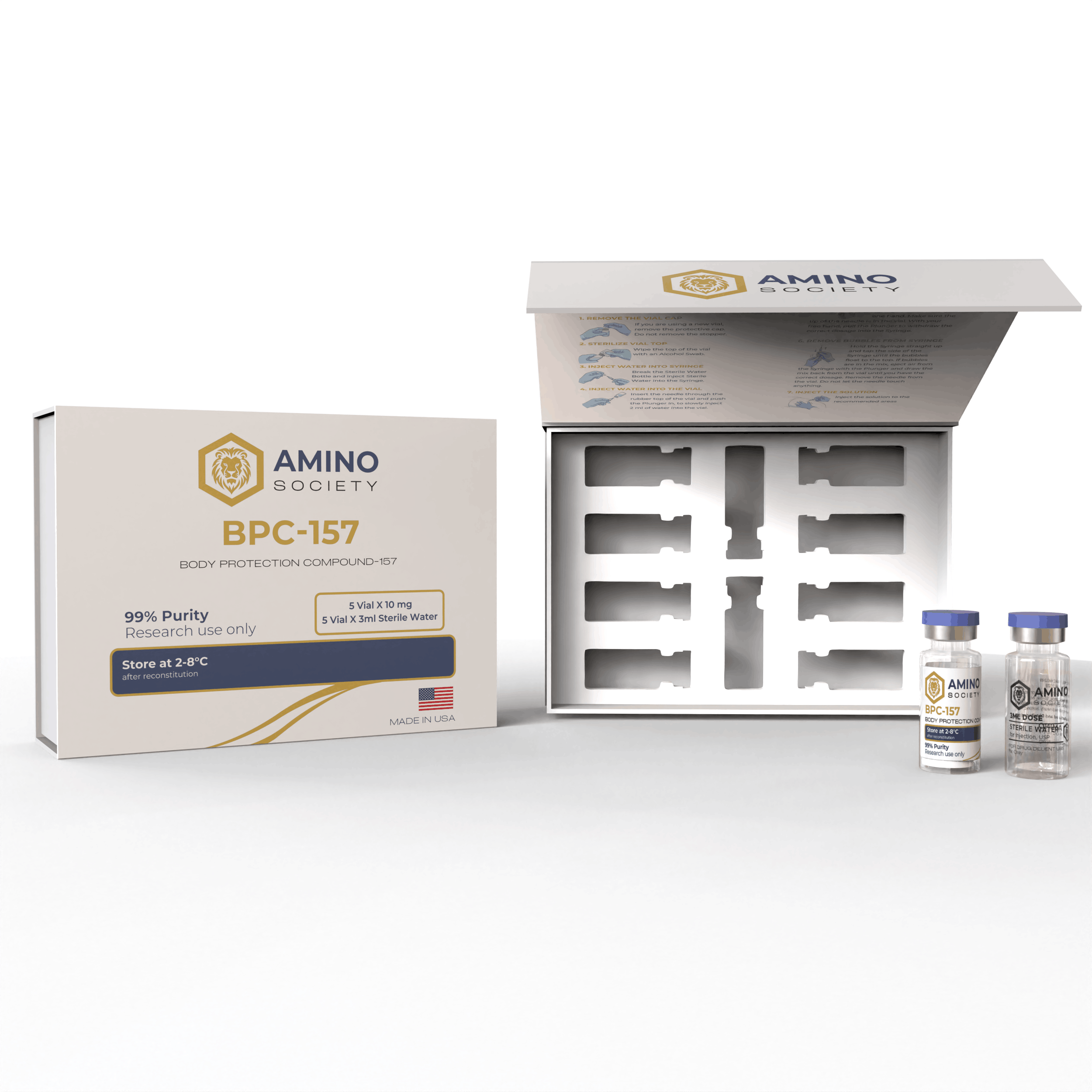
BPC-157 Overview
BPC-157 is a synthetic pentadecapeptide composed of 15 amino acids. It was originally derived from a naturally occurring protein fragment identified in gastric tissue. Since its discovery in the early 1990s, BPC-157 has been studied extensively in controlled experimental settings for its potential influence on molecular signaling, structural remodeling, and angiogenic processes.
History
The peptide was first synthesized by researchers investigating cytoprotective proteins found in gastric juice. Early experiments focused on its ability to support structural integrity in gastric models. Over time, studies broadened into structural, vascular, and epithelial systems, where BPC-157 consistently demonstrated properties of interest in the context of molecular remodeling and biological resilience.
BPC-157 Structure
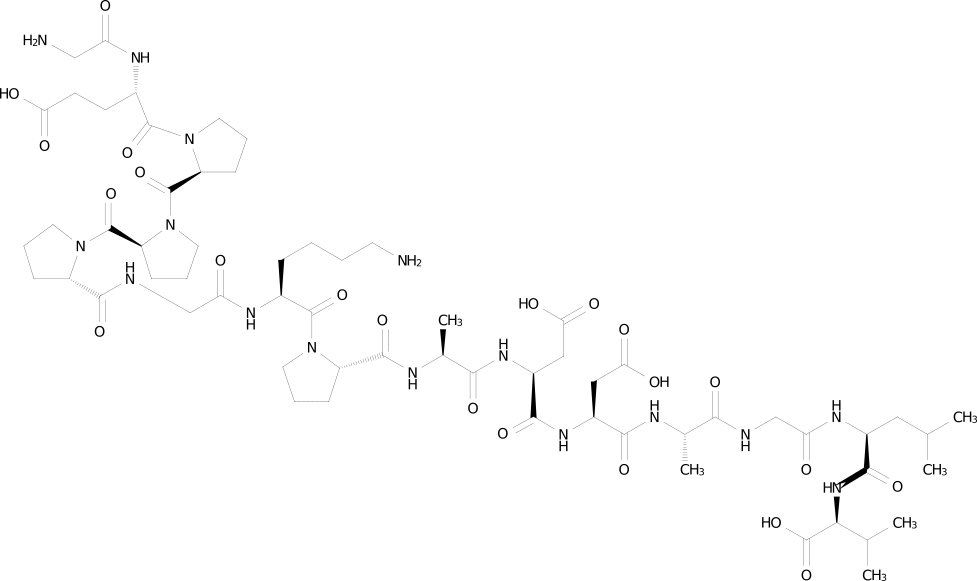
Molecular Formula: C₆₂H₉₈N₁₆O₂₂
Molecular Weight: 1419.556 g/mol
PubChem ID: 108101
Research Findings
BPC-157 has been studied in structural, vascular, epithelial, and systemic models, with reports of activity in collagen regulation, extracellular matrix remodeling, angiogenesis, and molecular migration. Research also highlights signaling roles in preclinical systems, supporting molecular integrity and pathway dynamics.
Key Areas of Research:
-
Structural: Collagen, matrix, tendon
-
Vascular: Angiogenesis, nitric oxide, signaling
-
Epithelial: Migration, vessel formation, matrix
-
Systemic: Signaling, viability, pathway dynamics
Together, these findings suggest broad experimental utility for BPC-157 across multiple biological pathways. Its activity in structural, vascular, epithelial, and systemic models provides a foundation for exploring diverse aspects of molecular biology. By influencing processes such as collagen regulation, vascular formation, and molecular signaling, BPC-157 offers a versatile platform for research into pathway dynamics and systemic resilience within experimental setting