
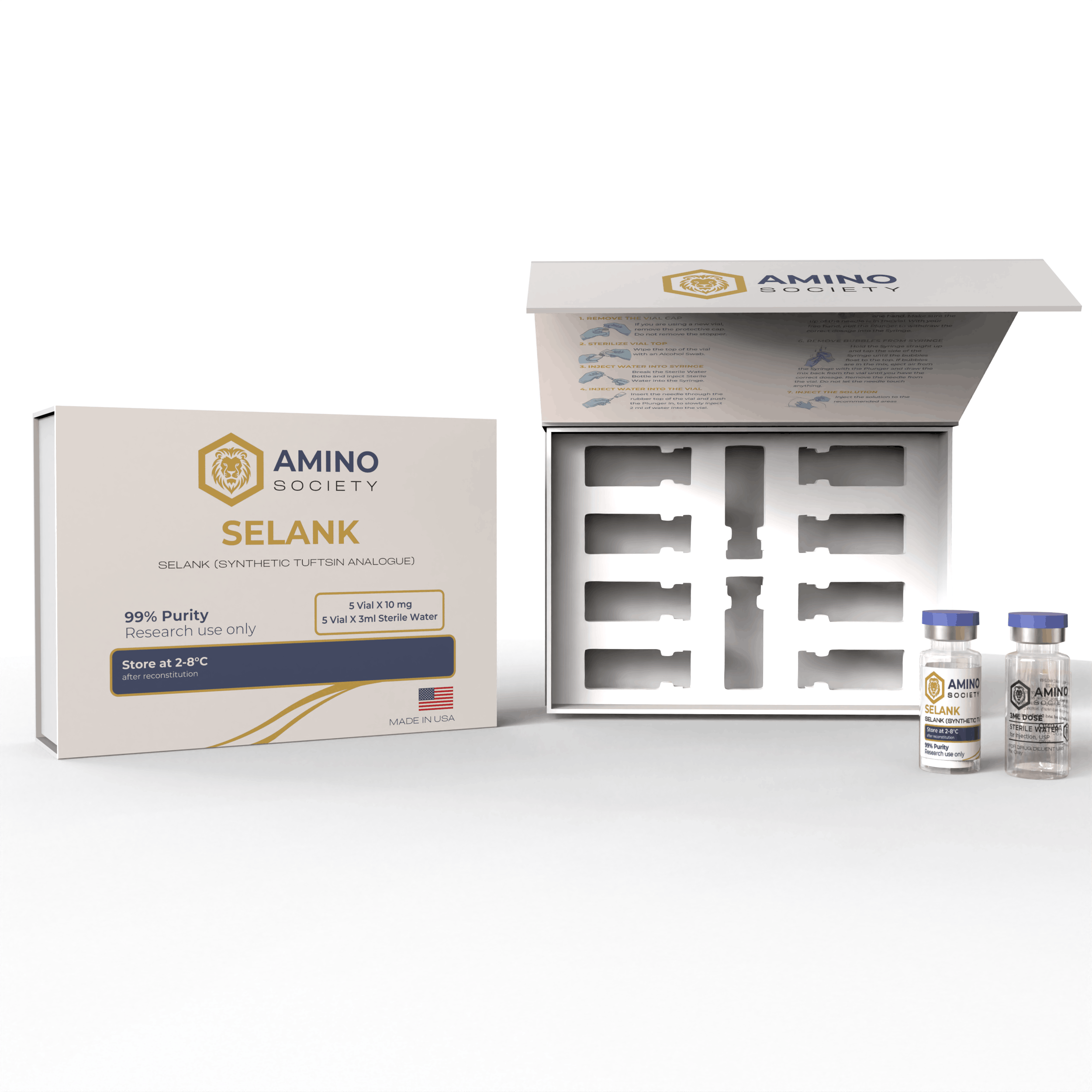
Selank Overview
Selank is a synthetic heptapeptide analog of tuftsin, a natural immunomodulatory fragment of IgG. It is studied in preclinical and laboratory models for its influence on neurotransmitter signaling, stress response pathways, and immune signaling. Research has examined Selank’s role in modulating GABAergic activity, monoamine dynamics, and cytokine signaling.
History
Selank was developed at the Institute of Molecular Genetics of the Russian Academy of Sciences in the 1990s as a synthetic analog of tuftsin, modified for improved stability and activity. Early studies explored its immunomodulatory and signaling properties, leading to broader investigations of its effects on neuropeptide signaling, CNS pathway dynamics, and systemic immune modulation in preclinical models.
Selank Structure
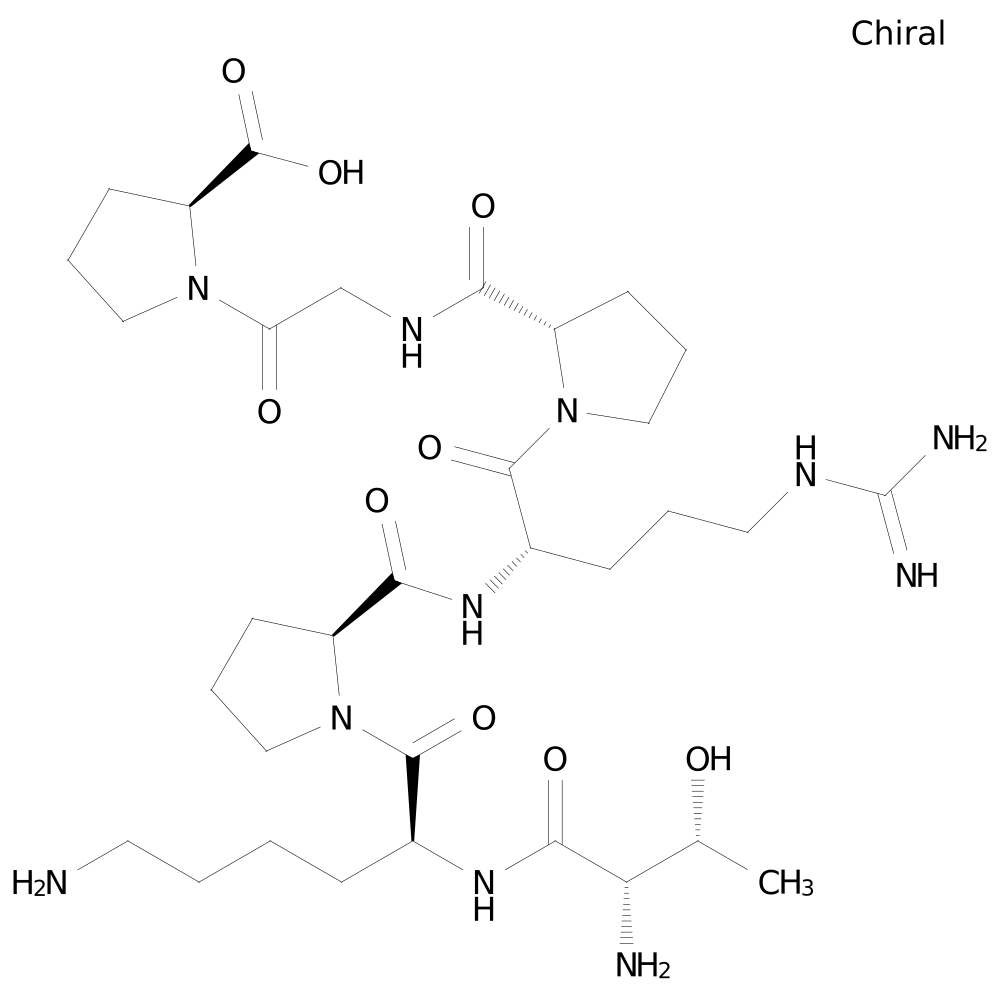
CAS #: 129954-34-3
Molecular Formula: C₃₄H₅₇N₁₁O₉
Molecular Weight: 751.9 g/mol
PubChem ID: 56841944
Research Findings
Selank has been studied in neurological, immune, and systemic models, with research highlighting its role in neuropeptide signaling, stress response pathways, and immune modulation. Studies also report activity in neurotransmitter dynamics, cytokine signaling, and pathway responses in preclinical settings.
Key Areas of Research:
-
Neurological: Neurotransmitters, stress pathways, signaling
-
Immune: Cytokine signaling, modulation, dynamics
-
Systemic: Signaling, viability, resilience
Together, these findings suggest broad experimental potential for Selank across neurological, immune, and systemic pathways. By modulating neurotransmitter activity and supporting immune signaling dynamics, Selank provides a versatile platform for research into stress biology, immune modulation, and systemic resilience in laboratory settings