
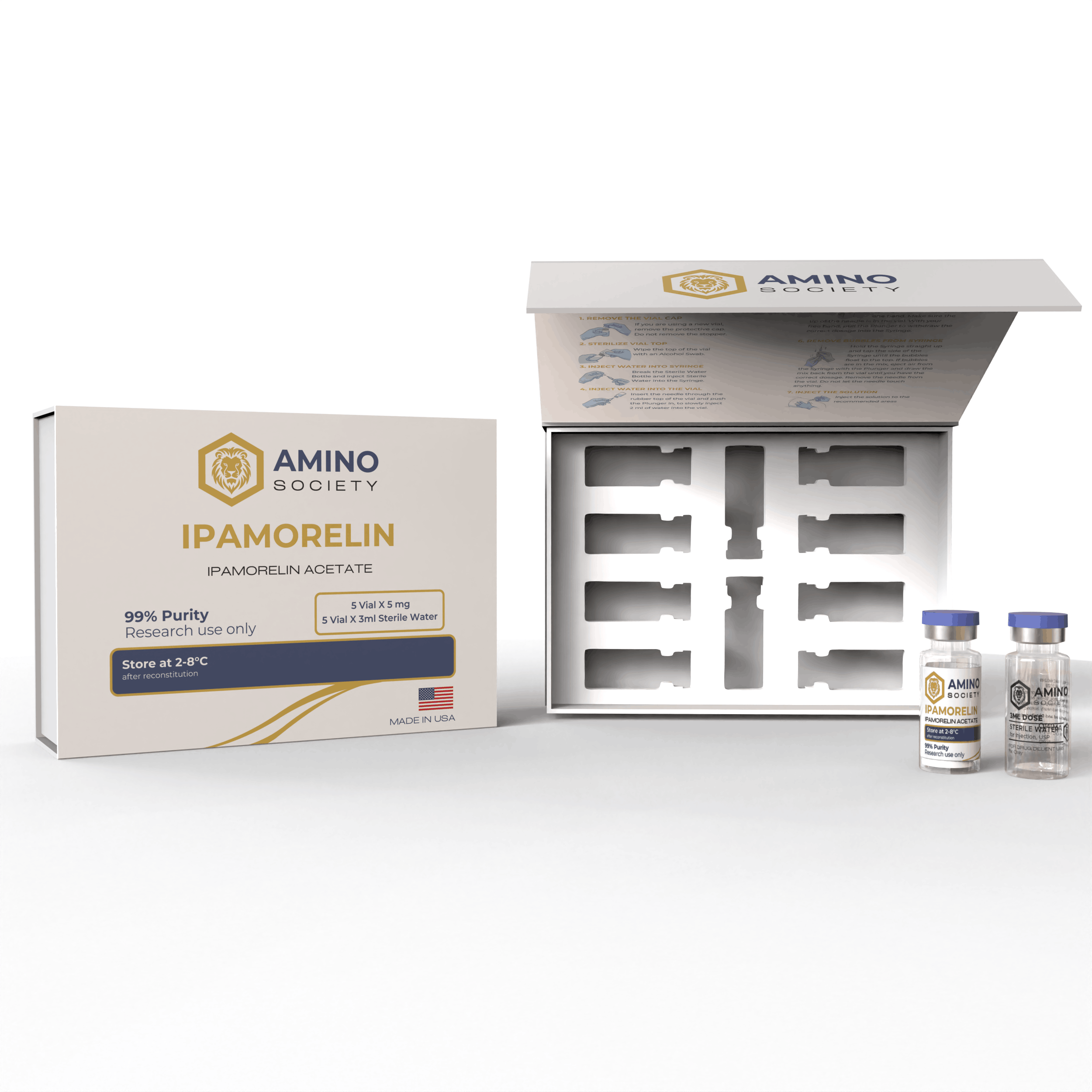
Ipamorelin Overview
Ipamorelin is a synthetic pentapeptide and selective secretagogue-type agonist. It is studied in preclinical and experimental research for its selective pituitary signaling activity with minimal off-target pathway interference. This selectivity makes it an important tool for investigating endocrine signaling, somatotroph axis modulation, and related molecular pathways.
History
Ipamorelin was developed in the 1990s during research into secretagogue-type peptides. Unlike earlier compounds such as GHRP-6, Ipamorelin demonstrated greater selectivity, activating target pathway signaling with minimal off-target interference. Since its discovery, it has been applied in studies investigating pituitary signaling, endocrine cascades, and downstream pathway dynamics in laboratory models.
Ipamorelin Structure
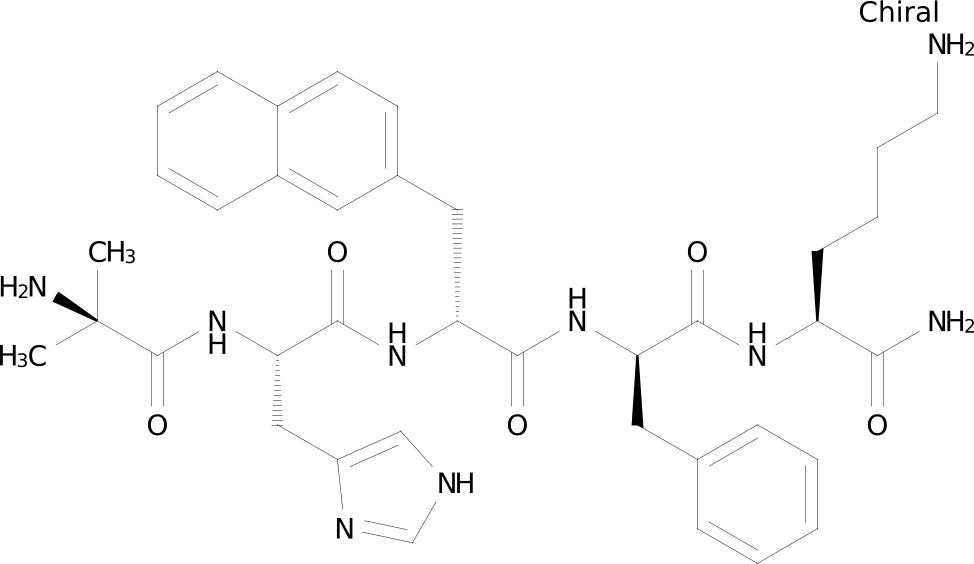
CAS #: 170851-70-4
Molecular Formula: C₃₈H₄₉N₉O₅
Molecular Weight: 711.9 g/mol
PubChem ID: 9831659
Research Findings
Ipamorelin has been studied in endocrine, metabolic, and regenerative models, with research highlighting its activity in stimulating growth hormone release, modulating IGF-1 pathways, and supporting tissue recovery processes. Studies have also examined its role in metabolic regulation, energy balance, and cellular repair in preclinical systems.
Key Areas of Research:
-
Endocrine: Somatotroph axis, signaling, cascades
-
Signaling: Systemic markers, pathway dynamics
-
Molecular: Remodeling, proliferation, viability
Together, these findings suggest experimental utility for Ipamorelin across multiple biological pathways. By influencing endocrine signaling and downstream remodeling processes, Ipamorelin provides a versatile platform for research into pathway dynamics, endocrine activity, and systemic resilience in laboratory settings.