
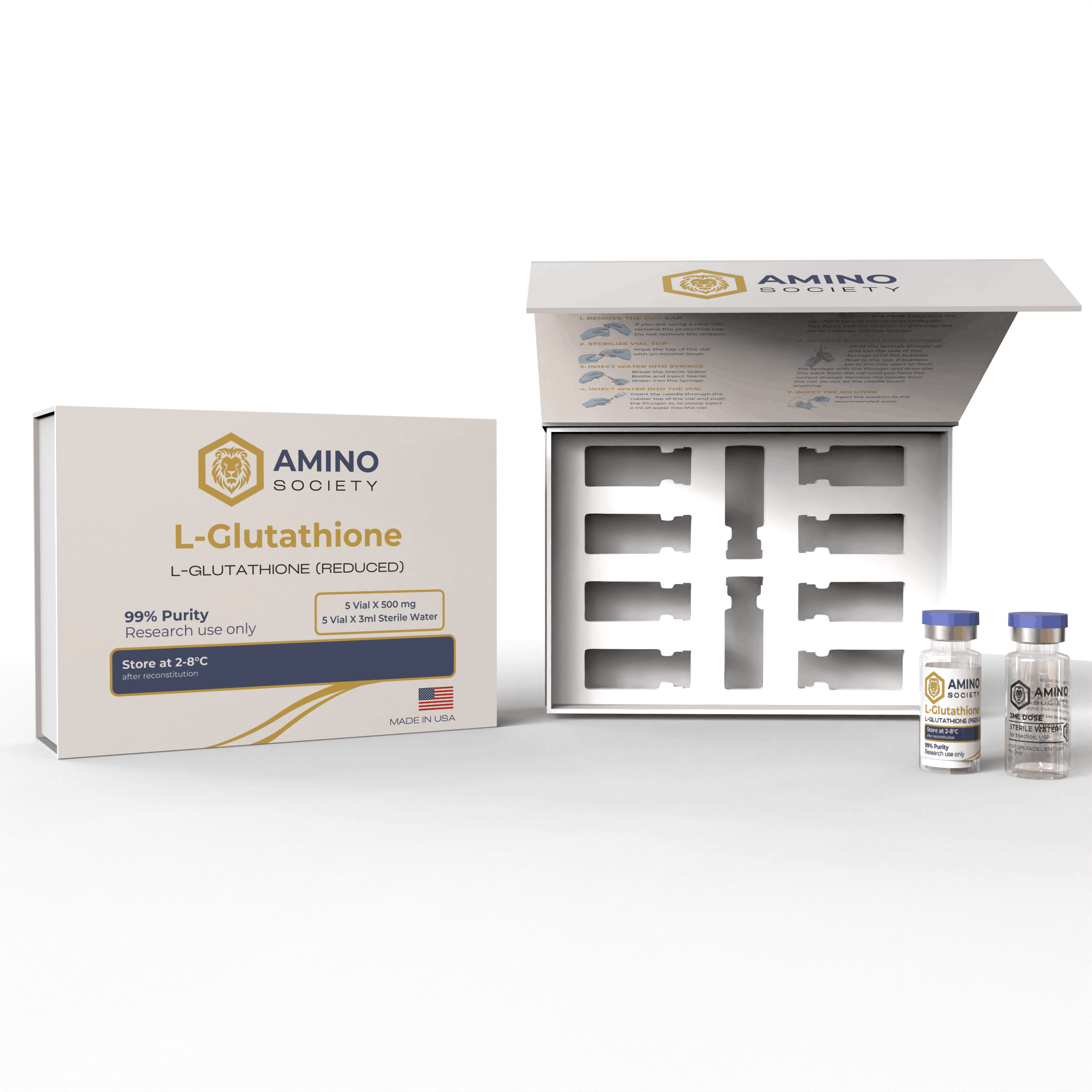
L-Glutathione Overview
L-Glutathione is a ubiquitous tripeptide present in virtually all living organisms, serving as a primary intracellular antioxidant and redox regulator. In its reduced form (GSH), it participates in neutralizing reactive oxygen species (ROS), maintaining redox homeostasis, and supporting the integrity of proteins, lipids, and DNA against oxidative stress. Through its sulfhydryl group on the cysteine residue, glutathione acts as a substrate for peroxidase enzymes that reduce hydrogen peroxide and lipid peroxides. Research models examine its role in phase II conjugation pathways, molecular proliferation and signaling, mitochondrial function, and protein folding regulation in laboratory settings.
History
Glutathione was first discovered in 1888 by J. de Rey-Pailhade as a sulfur-containing compound in yeast and animal tissues, initially termed “philothion.” The complete chemical structure as a γ-glutamylcysteinylglycine tripeptide was elucidated in 1935 by Frederick Gowland Hopkins, who received the Nobel Prize for his contributions to vitamin discovery. Since then, glutathione has been recognized as a fundamental molecule in cellular biochemistry and redox biology.
L-Glutathione Structure
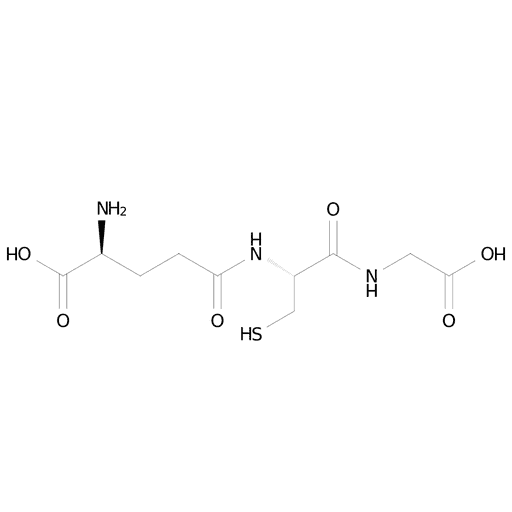
CAS#: 70-18-8
Molecular Formula: C₁₀H₁₇N₃O₆S
Molecular Weight: 307.32 g/mol
PubChem ID: 124886
Research Findings
L-Glutathione has been extensively studied in redox biology research, with investigations focusing on antioxidant mechanisms, conjugation pathways, signaling modulation, and molecular integrity in various experimental models. Studies examine glutathione’s role in enzymatic reactions, protein modification, and molecular signaling cascades.
Key Areas of Research:
-
Antioxidant: ROS neutralization, oxidative stress dynamics, lipid peroxidation
-
Conjugation: Phase II reactions, xenobiotic pathways, heavy metal chelation
-
Signaling: Lymphocyte dynamics, cytokine pathway regulation
-
Molecular: Mitochondrial function, protein folding, apoptosis regulation, genomic signaling
Together, these investigations demonstrate glutathione’s central role in redox homeostasis and molecular integrity. As a multifunctional tripeptide, GSH serves as a research tool for examining oxidative stress responses, conjugation capacity, signaling dynamics, and molecular resilience in diverse experimental systems.