
← Peptide vials
Amino Society / U.S. research brand / Vial collection
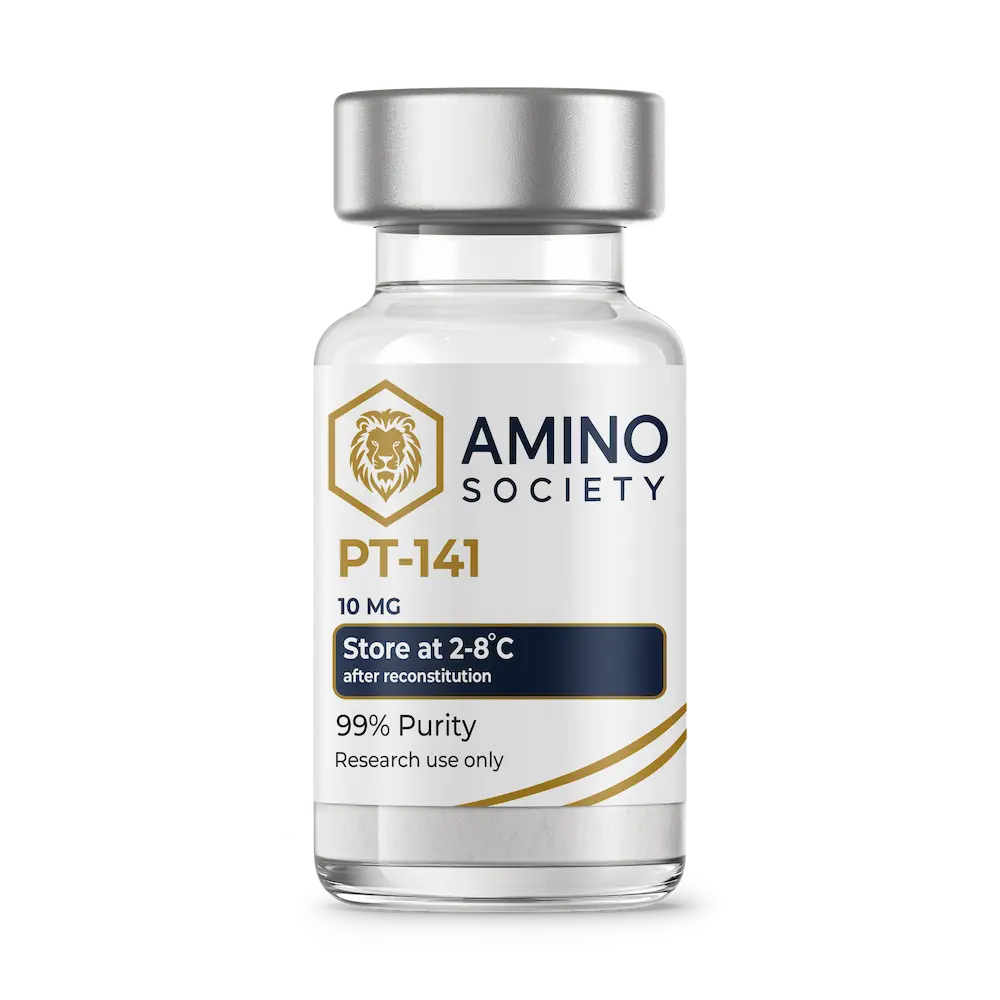
PT-141
Research vial format. Review the listed size and batch documentation before ordering.
Batch documentation
View COA status ↗Know your lot.
Match the lot on your product label to its Certificate of Analysis.
Listed format10mg
Listed price$49.99
+$8.99 $0.00
Included with eligible vialsComplimentary 3 mL BAC waterOne is added automatically for every peptide vial in your cart.
Bundle & save
Choose a quantity to see your savings.
For qualified research use only. Not for human or animal use.
Research description
PT-141
PT-141 is listed by Amino Society as a lyophilized research vial with the following listed option: 10mg.
Confirm the selected option, packaging label and lot number when the material arrives. Use that lot number to request the corresponding batch document from the COA library.
For qualified in-vitro laboratory research only. Not for human or animal use. This description does not provide administration, dosing or treatment guidance.
Verify a boxed product ↗Same collection
Explore more.