
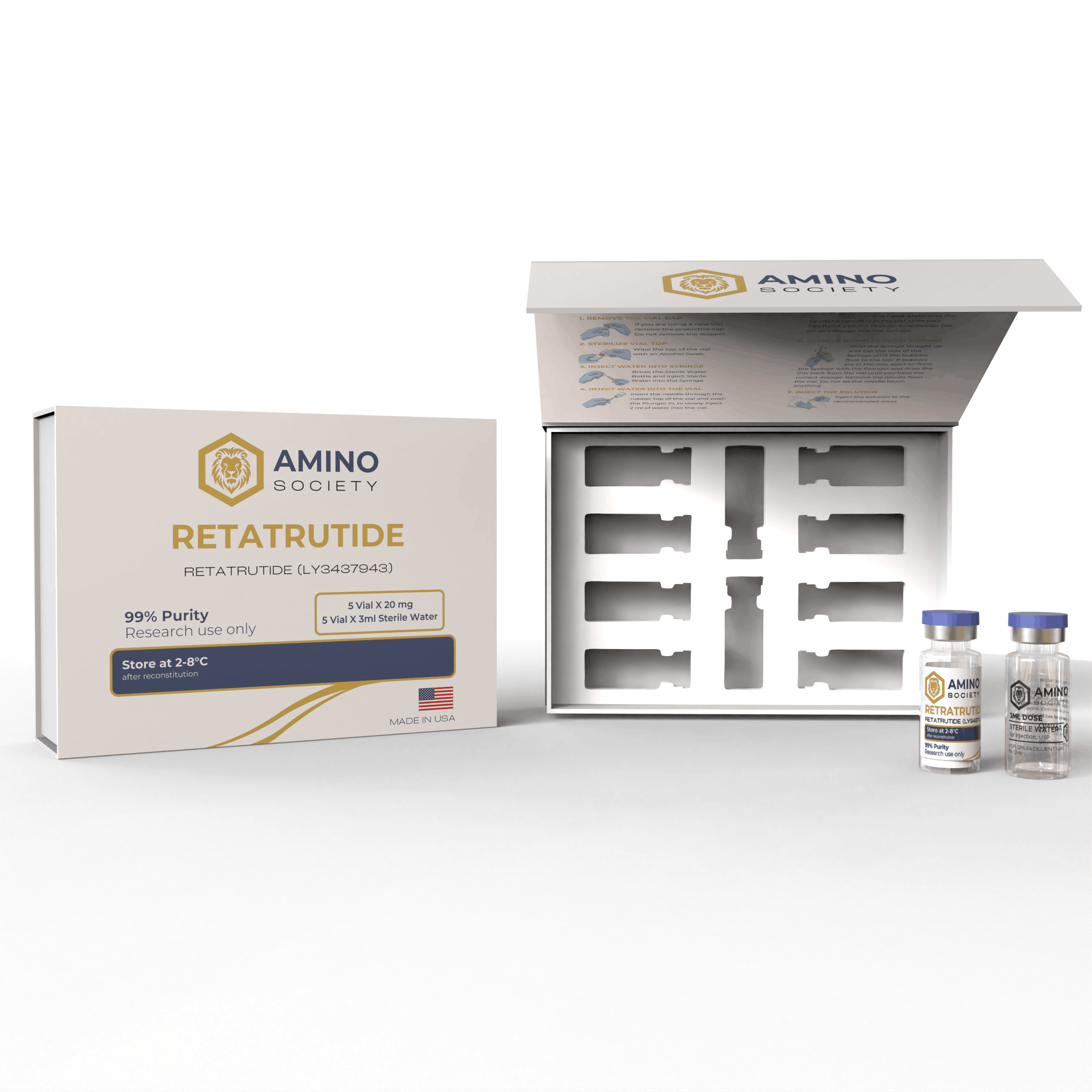
Retatrutide Overview
The safety profile of Retatrutide is still under investigation. Reported side effects have been gastrointestinal symptoms, such as nausea, vomiting, diarrhea, constipation and abdominal discomfort. An increase in side effects occurred with increased dosages. Less commonly reported side effects have included fatigue, headaches, and mild increases to heart rate. All drugs targeting GLP-1 receptors currently have the potential risk for pancreatitis, gallbladder disease, and gastrointestinal intolerance. These effects have not been linked to Retatrutide in current trials. However, long-term outcomes of side effects are still being established
History
Retatrutide (LY-3437943) is an experimental drug for obesity developed by the American pharmaceutical company Eli Lilly and Company. It is a triple glucagon hormone receptor agonist (GLP-1, GIP, and GCGR receptors).[1][2][3]
Retatrutide Structure

Research Findings
Retatrutide has been studied in a phase 2 trial involving adults without diabetes but with obesity or preobesity (overweight).[5][6][4] Retatrutide is also being evaluated in phase 3 clinical trials.[7] A substudy in adults with type 2 diabetes reported differences in total body fat mass between study groups at 36 weeks.[8]
Across clinical studies, the most commonly reported adverse events were gastrointestinal symptoms such as nausea, vomiting, and diarrhea.[4]
Preclinical and biochemical studies describe receptor activity at GLP-1, GIP, and glucagon receptors.[9] Reports on its development state that it was engineered for activity across these targets.[1]
Systematic reviews and meta-analyses of randomized controlled trials report that retatrutide produces substantial reductions in body weight in adults with obesity, with mean percentage weight loss typically between 15 and 24 percent over 48 to 72 weeks, depending on study protocols and populations.[10][11][12][13][14] Adverse events are most commonly gastrointestinal symptoms such as nausea and diarrhea, with relatively low rates of study discontinuation and infrequent serious adverse events reported during trials.[10][11][12] Safety assessments also indicate a low risk of hypoglycemia and no significant elevation in cardiovascular or hepatic adverse events in non-diabetic populations across published studies.[13][14]